

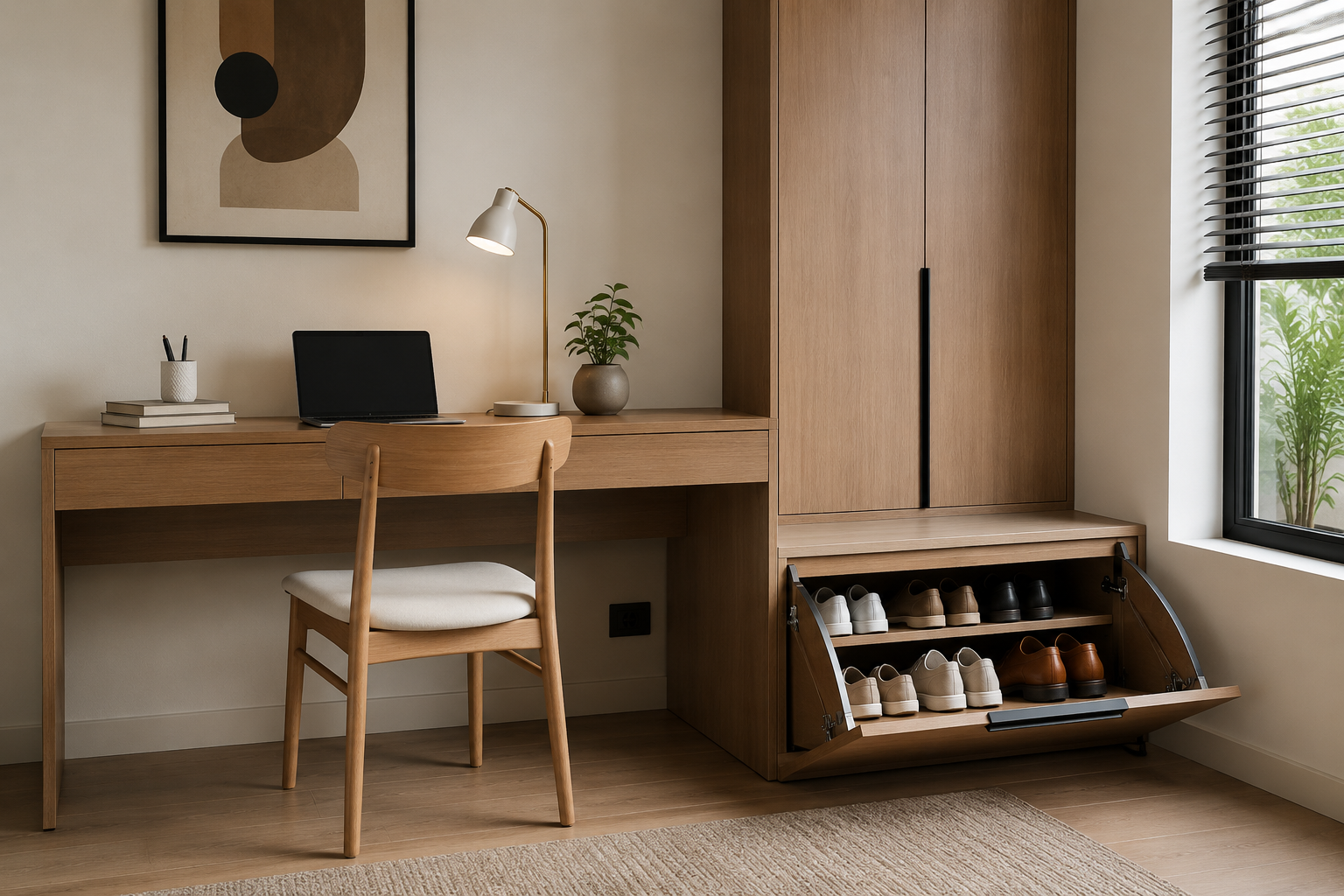
Homes today are expected to handle much more than they did earlier. One corner often becomes a study space, work setup, storage area, and planning spot all at once. People eat there during busy afternoons, charge devices there at night, and leave daily essentials around the same space without even realizing it. That is why modern homes start feeling messy very quickly.
The problem is usually not a lack of space alone. Most of the time, it happens because everyday items slowly spread across visible areas without proper organization. Shoes remain near the entrance, bags stay on chairs, chargers collect on tables, and suddenly even a clean room starts looking crowded. This is where smarter furniture planning starts making a real difference.
The goal is no longer filling rooms with more furniture. People now want setups that quietly handle multiple needs together while still keeping the room easy to use every day. A comfortable home usually feels simple, organized, and easy to move through.
One Corner Now Handles Multiple Daily Tasks
In many homes, one small area quietly becomes the busiest spot without anyone planning it intentionally. The study table is no longer used only for studying. It becomes a work desk during office hours, a place for planning schedules, paying bills, keeping devices, storing daily items, and sometimes even eating quick meals between tasks. Because of this, furniture needs have changed naturally.
Single purpose setups often stop working after a while because daily routines demand more flexibility. Separate storage units for every small thing also make compact homes feel crowded quickly.
People now prefer spaces that stay practical without looking overloaded. A compact table for study works better when it supports organization along with regular work needs. The setup should feel clean enough for focus while still handling everyday clutter quietly in the background.
Rooms become easier to maintain when furniture adapts around real routines instead of forcing everything into separate corners.
Small Rooms Feel Tight Faster Without Proper Storage
A small room can feel comfortable or frustrating depending on how clutter is managed. Even a decent amount of space starts feeling restricted once everyday items begin collecting everywhere. Shoes near the door, loose papers on tables, bags on chairs, and scattered accessories slowly make movement uncomfortable.
Visual clutter affects comfort more than people realize. When too many things remain visible all the time, the room starts feeling mentally heavy. Cleaning also becomes tiring because every surface needs constant rearranging before it can even be wiped properly.
Footwear is one of the biggest reasons this happens. In many homes, shoes slowly spread outside rooms or near entryways because there is no proper dedicated space nearby. Over time, the area begins looking untidy even when everything else stays organized.
The issue is rarely about laziness.Usually the house simply lacks practical storage close to where people actually use things every day. That is why planning matters much more than adding extra furniture randomly.
One Smart Setup Can Change The Entire Room
Sometimes one practical furniture idea improves the entire feel of a room. Instead of using separate units for study and storage, many modern homes now combine both functions together in one cleaner setup. This immediately saves floor space and reduces unnecessary furniture crowding the room.
A study table designed with hidden shoe storage works especially well in compact homes. The table continues handling work or study comfortably while the lower section quietly manages footwear storage without needing another rack placed elsewhere.
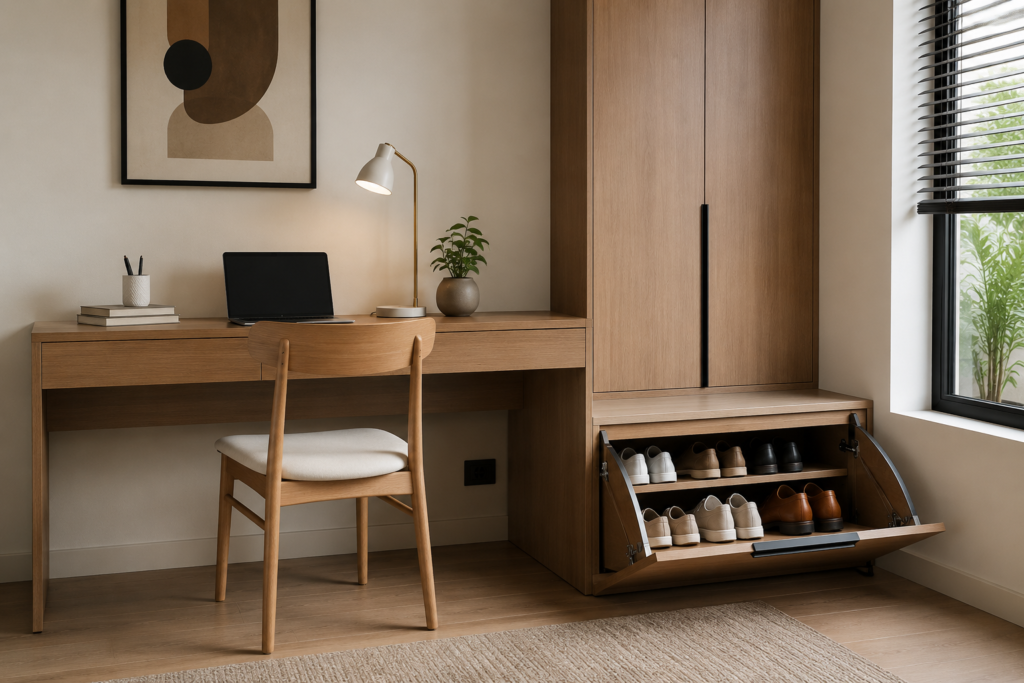
This type of setup feels more natural in daily life. Shoes remain organized without being visible constantly, and the room instantly feels calmer because fewer things stay outside. At the same time, the furniture still looks simple instead of heavily functional.
The biggest advantage is movement. Once unnecessary units disappear, the room feels more open automatically even though the actual size remains unchanged. Good furniture should quietly improve how the room functions every day.
Dedicated Shoe Storage Solves Everyday Mess
Footwear clutter builds up faster than most people notice. One pair left near the door becomes several pairs within days, especially in family homes where multiple people use the same area constantly. Without dedicated storage, entryways and corners quickly start looking disorganized.
A wooden shoe rack for home entryway setups helps manage this problem much better because footwear gets a fixed place instead of spreading around visible areas.
Hidden or lower compartments work especially well. They keep shoes accessible during busy routines while still protecting the room from visual clutter. Closed storage also helps reduce dust and keeps the area looking cleaner overall.
Daily routines become smoother too. People no longer spend time searching for footwear or rearranging scattered pairs near the entrance every morning. Simple organization quietly saves effort throughout the day. Good shoe storage should feel practical without drawing attention to itself.
Hidden Storage Makes Rooms Feel Calmer
Storage works best when it supports the room quietly instead of dominating it visually. Open clutter usually makes spaces feel busier than they actually are. Hidden compartments solve this because daily use items stay available without remaining constantly visible.
This creates a calmer atmosphere immediately. The room starts feeling cleaner not because there are fewer things, but because everything finally has a proper place. Even compact rooms appear larger when surfaces remain open and unnecessary items disappear from sight.
Simple furniture designs help too. Heavy decorative units often make smaller spaces feel tighter, while cleaner lines and balanced finishes create a lighter feeling inside the room.
Storage should blend naturally into the setup instead of looking like an afterthought added later. The most comfortable homes are often the ones where organization feels effortless.
Better Living Usually Comes From Simpler Choices
People often assume better homes require more furniture, more storage units, or larger rooms.
In reality, homes usually feel more comfortable when unnecessary things are reduced. One practical setup replacing multiple furniture pieces often works far better than overcrowding the room with separate units everywhere. The house feels easier to clean, movement improves, and daily routines become smoother naturally.
Less clutter also affects mood quietly. Cleaner spaces usually feel less stressful because the mind is not constantly processing visual mess in the background. Focus improves too, especially in study or work areas where organization matters daily.
Modern homes are slowly moving toward this kind of thinking now. Instead of adding more furniture into already limited spaces, people are trying to make each piece more useful and practical long term.
At the end of the day, smart living is usually not about having bigger rooms. It is about making the available space feel easier, calmer, and more comfortable every single day.