

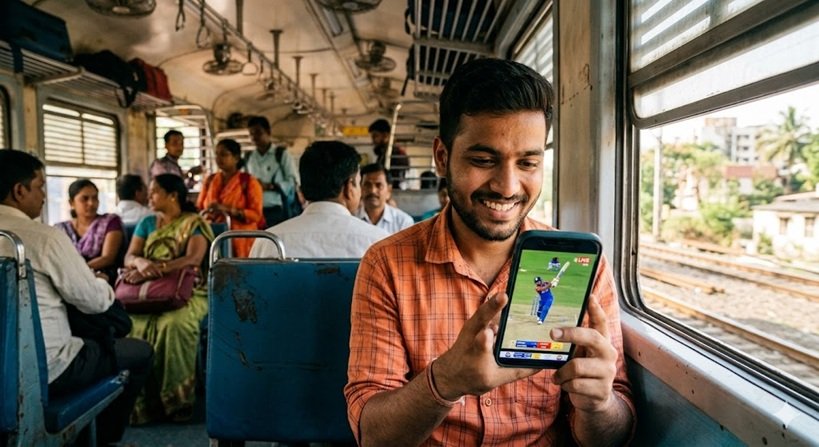
Mobile entertainment in India has its own rhythm. People open apps in short bursts during the day, between errands, while commuting, or late at night when there is finally a little room to switch off. In moments like that, the screen has to make sense fast. Nobody wants to spend those first seconds figuring out what belongs where or why the session feels heavier than expected. That is part of the reason live formats keep drawing attention. They offer something more immediate than ordinary mobile browsing. A live session feels active from the first moment because something is already happening. There is movement, pace, and a clear center of attention. When that experience is shaped well for local mobile habits, it becomes much easier to trust and much easier to return to.
Why live sessions feel different from ordinary app time
Most digital content can sit in the background without asking much from the person watching it. A short video, a feed, or a lightweight game can drift by while attention moves somewhere else. Live entertainment works differently. It feels more present. A real-time table, visible action, and a fixed pace make the session feel less disposable than automated content that can be opened and closed without leaving much behind. That shift matters because people often remember experiences that had structure. They remember what felt active rather than passive, and what held attention without forcing it.
That is why a live casino app india experience works best when the mobile journey feels direct from the opening seconds. The user should be able to see what matters, follow the pace, and stay with the session without sorting through a messy interface first. When the layout feels clean and the table remains the focus, the experience starts to feel more natural. Instead of treating live entertainment as something complicated or overly engineered, the better approach is to make it feel easy enough to enter and steady enough to trust.
Trust starts before the session really begins
In live entertainment, trust is built early. It starts with the first screen, the loading speed, the clarity of the interface, and the feeling that the page knows exactly what it is trying to do. Users decide fast whether something feels stable or slightly off. That reaction is often emotional before it becomes logical. If the table is clear, the controls make sense, and the information is placed where it should be, the whole session feels calmer. If important details are buried or the screen feels overloaded, confidence starts to slip.
That early impression matters even more in any format connected to money. People want to feel that the environment around the session is under control. A live experience does not need to be loud to feel convincing. In many cases, it works better when it feels organized, measured, and easy to follow. Calm design often creates more trust than aggressive visual energy ever could.
Small interface choices can make the session feel human
A human-feeling session usually comes from details that seem minor until they are missing. The table needs room to breathe. Buttons should be easy to reach without covering the action. Supporting information has to stay readable without turning into visual clutter. Camera angles, timing, and the way each round is presented all shape whether the session feels smooth or awkward. None of that is decorative. It changes how long a person stays and whether the experience feels worth repeating later.
Why real-time pacing fits mobile better than expected
There is a common assumption that mobile entertainment always has to be fast and relentless. In reality, many people respond better to a pace that gives them something to follow. Live formats do that well because they move with a visible rhythm. The session has a beginning, a middle, and a result that feels connected to what just happened. That gives the screen a sense of order. It also makes short visits feel more complete because the user is stepping into a real sequence rather than tapping through disconnected moments.
This matters on mobile because so much other content is built around endless replacement. One clip becomes another. One page becomes the next. Very little of it feels distinct. A live session stands out because it has shape. That shape can make even a brief visit feel more memorable than a longer stretch of passive app time.
Familiar financial behavior also affects comfort
In India, digital payment habits are already deeply woven into daily life. People are used to clear flows, fast confirmations, and interfaces that do not create doubt halfway through a transaction. Those expectations do not disappear when the product is entertainment. They carry straight into it. If the surrounding structure feels uncertain, the mood of the whole session changes. The user becomes more cautious and less relaxed, even if the live element itself looks appealing.
That is why the strongest live products treat wallet clarity, balance visibility, and transaction flow as part of the experience rather than a separate layer around it. When those basics feel familiar, the user can focus on the session instead of second-guessing the environment.
What keeps people coming back is usually simple
Repeat visits rarely come from pressure. They come from a feeling that the experience was easy to enter, easy to follow, and easy to trust. In India’s mobile-first environment, that standard matters even more because users already know what smooth digital behavior feels like. Live entertainment stands out when it respects that expectation and shapes the session around real phone habits instead of abstract design ideas. When the pace feels natural, the layout feels calm, and the overall flow feels local rather than generic, the result is much stronger than a flashy screen trying too hard to impress. People return to what feels right in the hand, and live formats have real staying power when they are built with that truth in mind.