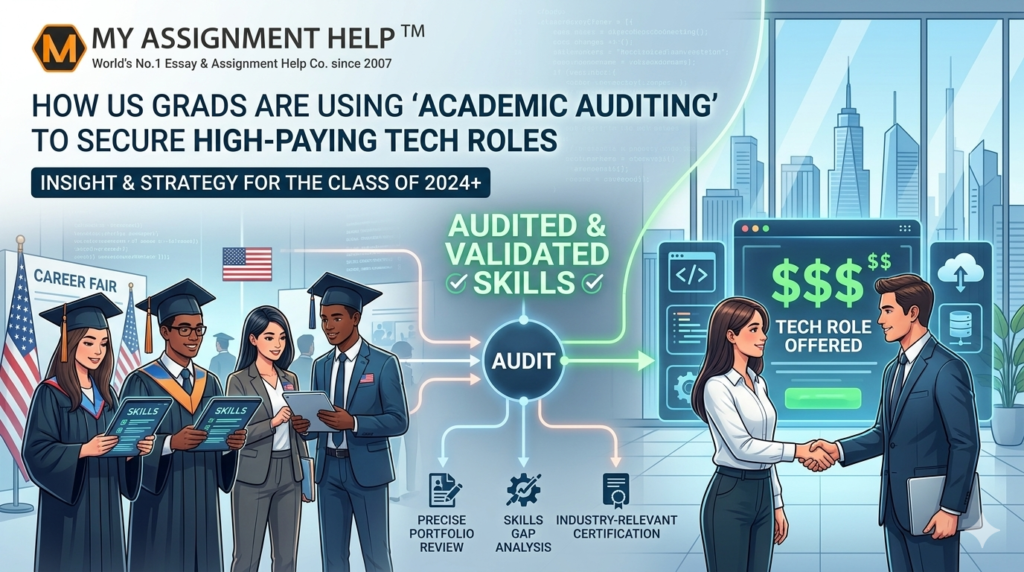
The US tech landscape is currently defined by a paradox: while mass layoffs at “Big Tech” firms dominate the headlines, the demand for specialized talent in Artificial Intelligence (AI), Cybersecurity, and Cloud Architecture remains at an all-time high. However, the traditional degree is no longer a guaranteed golden ticket. To bridge the gap between classroom theory and industry demands, a new trend has emerged among savvy American graduates: Academic Auditing.
Rather than simply coasting through a curriculum, high-achieving students are now treating their education like a corporate quality-control process. They are auditing their own learning paths to ensure every credit hour translates into a marketable skill.
What is Academic Auditing?
In a professional context, auditing involves a systematic review of records to ensure accuracy and compliance. In the realm of higher education, “Academic Auditing” is the proactive process where students evaluate their current coursework against real-time job descriptions from companies like NVIDIA, OpenAI, and AWS.
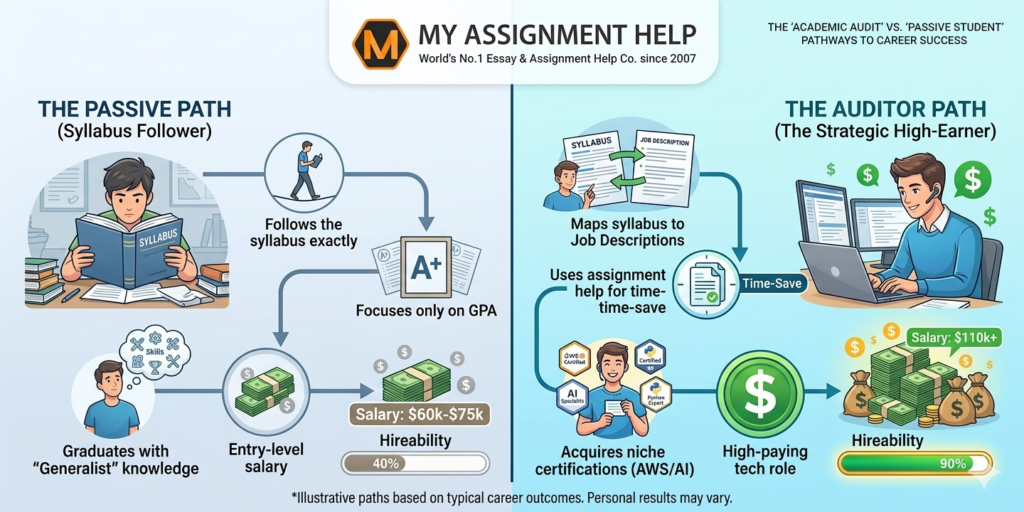
If a university syllabus for “Data Structures” is two years out of date, the auditing student doesn’t just complain—they supplement. They identify the “knowledge debt” in their degree and fill it with targeted certifications, project-based learning, and external expert guidance. This strategic approach ensures that by the time they walk across the stage at graduation, their portfolio is indistinguishable from that of a mid-level professional.
The Role of Supplemental Support in the Audit Process
One of the primary drivers of this trend is the sheer pace of technological change. Academic institutions often struggle to update their curricula as fast as the industry evolves. To keep their GPAs competitive while simultaneously building complex technical projects, many students are turning to professional academic services to manage their baseline workload.
For instance, a computer science major might use assignment help to ensure their foundational theoretical papers are flawless and submitted on time. This allows them to reallocate their “deep work” hours toward mastering specific coding languages or contributing to open-source projects that tech recruiters actually value. This strategic delegation is a hallmark of the “auditing” mindset—optimizing one’s time to focus on the highest-ROI activities.
Data-Driven Insights: Why the Shift is Happening
The move toward academic auditing isn’t just a trend; it’s a response to the rising cost of education and the shifting “skills vs. degree” debate. According to a 2023 report from General Assembly, 62% of tech hiring managers now prioritize “proven skills” over “university prestige.”
Furthermore, the financial pressure on US graduates is immense. When considering the ROI of a degree, many students are beginning to question the traditional model entirely. As explored in a recent discussion on why college education should be free, the burden of student debt often forces graduates to seek high-paying roles immediately, leaving no room for “entry-level” learning curves. Academic auditing is their insurance policy against unemployment.
Key Strategies Grads are Using to “Audit” Their Degrees
- Job Description Reverse-Engineering: Students find “Dream Job” postings during their sophomore year and map their junior/senior electives to match the “Required Skills” section.
- The “Third-Party” Validation: Auditing involves getting work checked by industry professionals rather than just TAs. This includes code reviews on GitHub and seeking external feedback on technical documentation.
- Cross-Disciplinary Auditing: Tech roles no longer require just “coding.” Grads are auditing their “soft skill” gaps, taking communications or business ethics courses to prepare for leadership tracks (Product Management, etc.).
Key Takeaways for 2026 Graduates
- The Degree is the Baseline, Not the Ceiling: Treat your diploma as a foundation, but use auditing to build the “skyscraper” of your specific expertise.
- Time Management is Currency: Use academic support tools to maintain your GPA so you can spend your weekends at hackathons or networking.
- Audit for AI Fluency: Regardless of your major, audit your curriculum for AI integration. If it’s missing, find external ways to learn Prompt Engineering and LLM fine-tuning.
- Document the Process: Keep a “learning log” that shows how you identified a gap in your university education and took steps to fill it. Recruiters love this narrative.
The Future of Hiring: From Credentials to Competencies
As we move further into 2026, the “Academic Audit” will likely become a standard part of the career services office. However, for now, it remains a “secret weapon” for those who realize that the most successful tech professionals are those who take full ownership of their intellectual development. By auditing your education today, you ensure you aren’t just “degreed,” but truly “industry-ready.”
FAQ Section
Q: Is academic auditing the same as “cheating”?
A: Not at all. Academic auditing is a self-governance strategy. It’s about evaluating the relevance of your education and seeking supplemental resources—like tutoring or industry certifications—to ensure you meet professional standards.
Q: Does this apply to non-tech majors?
A: Absolutely. Whether you are in marketing, healthcare, or finance, auditing helps you identify if your coursework aligns with the digital transformation happening in your specific field.
Q: How do I find out what skills are “missing” from my degree?
A: Look at LinkedIn profiles of people who graduated from your program 2–3 years ago and are now in roles you want. See what certifications or skills they added after graduation—those are your audit targets.
Author Bio
Dr. Aris Thorne is a Senior Content Strategist and Academic Consultant at MyAssignmentHelp. With over 15 years of experience in the US higher education sector, Dr. Thorne specializes in helping students bridge the gap between academic theory and professional application. He has published numerous papers on the “Skills-First” economy and is a frequent contributor to discussions regarding the democratization of digital education.